Monitor Sharpness Test

Evaluate your monitor's sharpness and text clarity with our free online sharpness test. Run the test in full screen to check image detail, edge definition, and display clarity.

START TESTVIEW IN FULL SCREENCHECK TEXT & EDGES

This test displays sharp text, lines, and fine details to help you evaluate your monitor's sharpness. Look for blurry edges, soft text, or over-sharpening artifacts that may affect image quality.

Fullscreen recommendedClick = next view1-5 = direct viewESC to exit

Tips for Best Results

  • Let your monitor warm up for 20–30 minutes.
  • Clean the screen before testing.
  • Use your monitor's native resolution.
  • View the test from your normal seating position.

What Is Monitor Sharpness?

Monitor sharpness describes how clearly your display renders text, lines, and fine details. A sharp monitor produces crisp edges and readable text, while poor sharpness can make images appear soft, blurry, or artificially over-sharpened.

Sharpness depends on several factors, including your monitor's native resolution, pixel density, display settings, and image scaling.

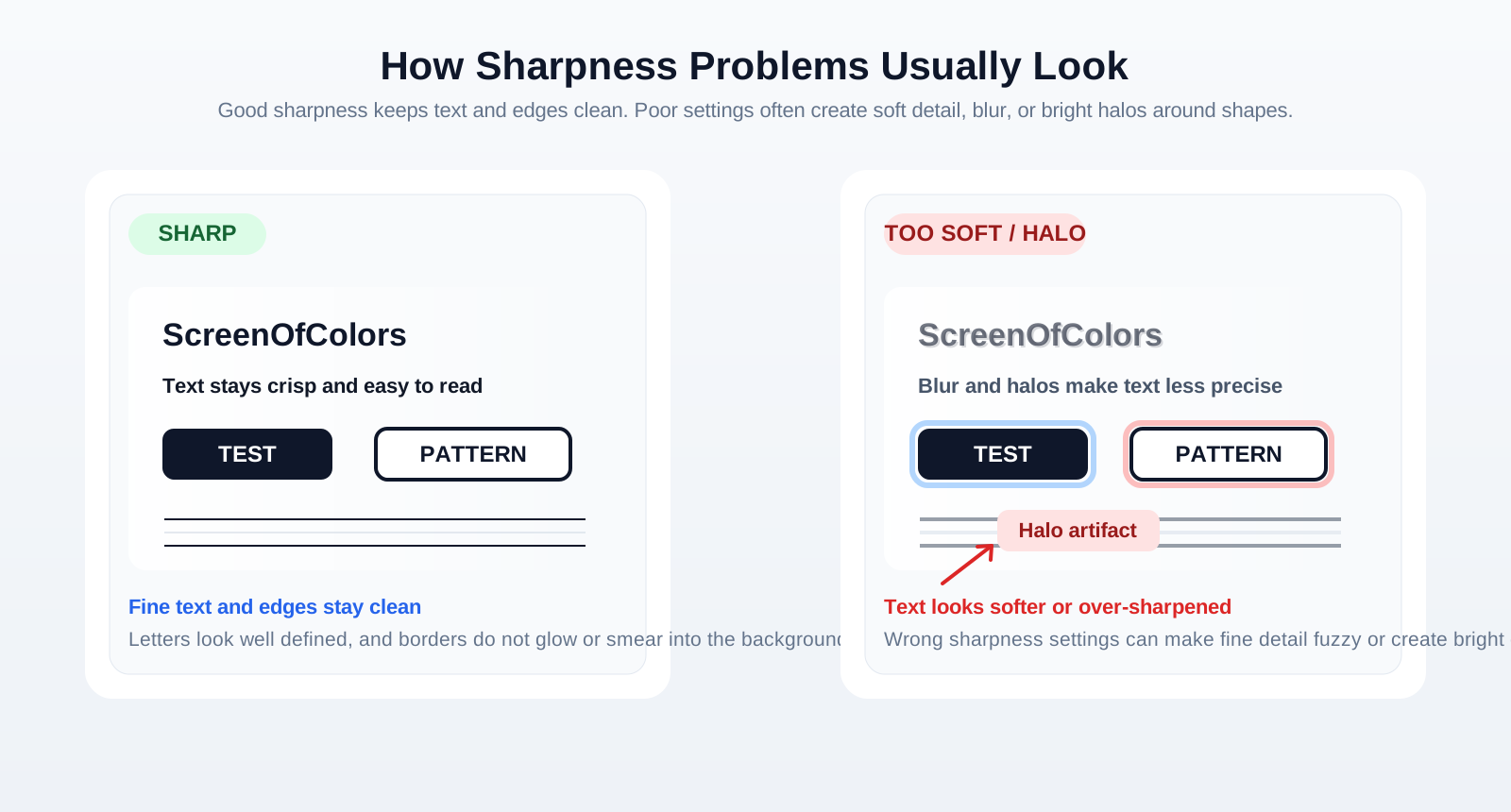
Comparison of a crisp sharp display and a display with softer text or halo artifacts around edges.
Sharpness issues usually show up as soft text, fuzzy fine lines, or bright halos around high-contrast edges instead of clean, well-defined detail.

What Affects Monitor Sharpness?

Native Resolution

Using your monitor's native resolution provides the clearest image. Running at lower resolutions often reduces image quality and detail.

Pixel Density (PPI)

Displays with a higher pixel density generally produce sharper text and finer image details because individual pixels are less visible.

Sharpness Settings

Many monitors include a built-in sharpness control. Setting it too low can make the image look soft, while setting it too high may introduce halos or edge artifacts.

Display Scaling

Operating system scaling and browser zoom levels can also affect perceived sharpness, especially for text.

How to Test Monitor Sharpness

Our online Monitor Sharpness Test displays fine text, thin lines, and detailed patterns to help you evaluate image clarity.

For the best results:

  1. Set your monitor to its native resolution. This removes scaling softness caused by running the panel below its intended resolution.
  2. Open the test in full-screen mode. Full screen gives you the cleanest possible view and avoids browser distractions.
  3. View the screen from your normal seating distance. That is the most realistic way to judge text clarity and fine detail.
  4. Look for blurry text, soft edges, or excessive sharpening artifacts. Those are the main signs that sharpness or scaling may need adjustment.

If necessary, adjust your monitor's sharpness setting and compare the results.

Common Sharpness Problems

Blurry or fuzzy text

Soft image details

Jagged or oversharpened edges

Halo effects around text or objects

Difficulty reading small fonts

These issues are often caused by incorrect display settings rather than hardware problems.

Tips for Better Sharpness

  • Use your monitor's native resolution.
  • Choose the recommended display scaling.
  • Adjust the sharpness setting gradually.
  • Sit at a comfortable viewing distance.
  • Clean the screen before testing.

Frequently Asked Questions

What is the best sharpness setting?
There is no universal setting. The best sharpness level depends on your monitor model and personal preference. A good setting should produce clear text without visible halos.
Does higher resolution improve sharpness?
Yes. Higher resolutions generally produce sharper images because more pixels are used to display fine details.
Can this test measure sharpness automatically?
No. Browser-based tests cannot measure hardware sharpness directly. Instead, they provide reference patterns that help you visually evaluate your monitor.
Why does text still look soft on a high-resolution display?
Soft text can still happen if the display is not using its native resolution, if scaling is poorly configured, if browser zoom is not at 100%, or if the monitor sharpness control is set too low or too high.
What does oversharpening look like?
Oversharpening often appears as halos, bright outlines, jagged edges, or artificial contrast around text and objects. The image may look harsh instead of naturally crisp.

Related Screen Tests

Current ViewAll Views
Text ClarityCheck whether small fonts stay crisp and readable.
Sharp text should look crisp without glow or blur.
The quick brown fox jumps over the lazy dog. 1234567890
Regular • Medium • Bold • Semibold • Light
Monospace sample: HDMI 2.1 / 3840×2160 / RGB / 100%
Serif text helps reveal edge softness and font rendering issues.
8 pt9 pt10 pt11 pt12 pt13 pt
Fine LinesLook for smearing, uneven spacing, or softened thin lines.
Edge DefinitionWatch for halos, jagged outlines, or harsh over-sharpening.
Fine DetailInspect micro patterns, checkerboards, and small detail blocks.
DETAIL · DETAIL · DETAIL · 0123456789